
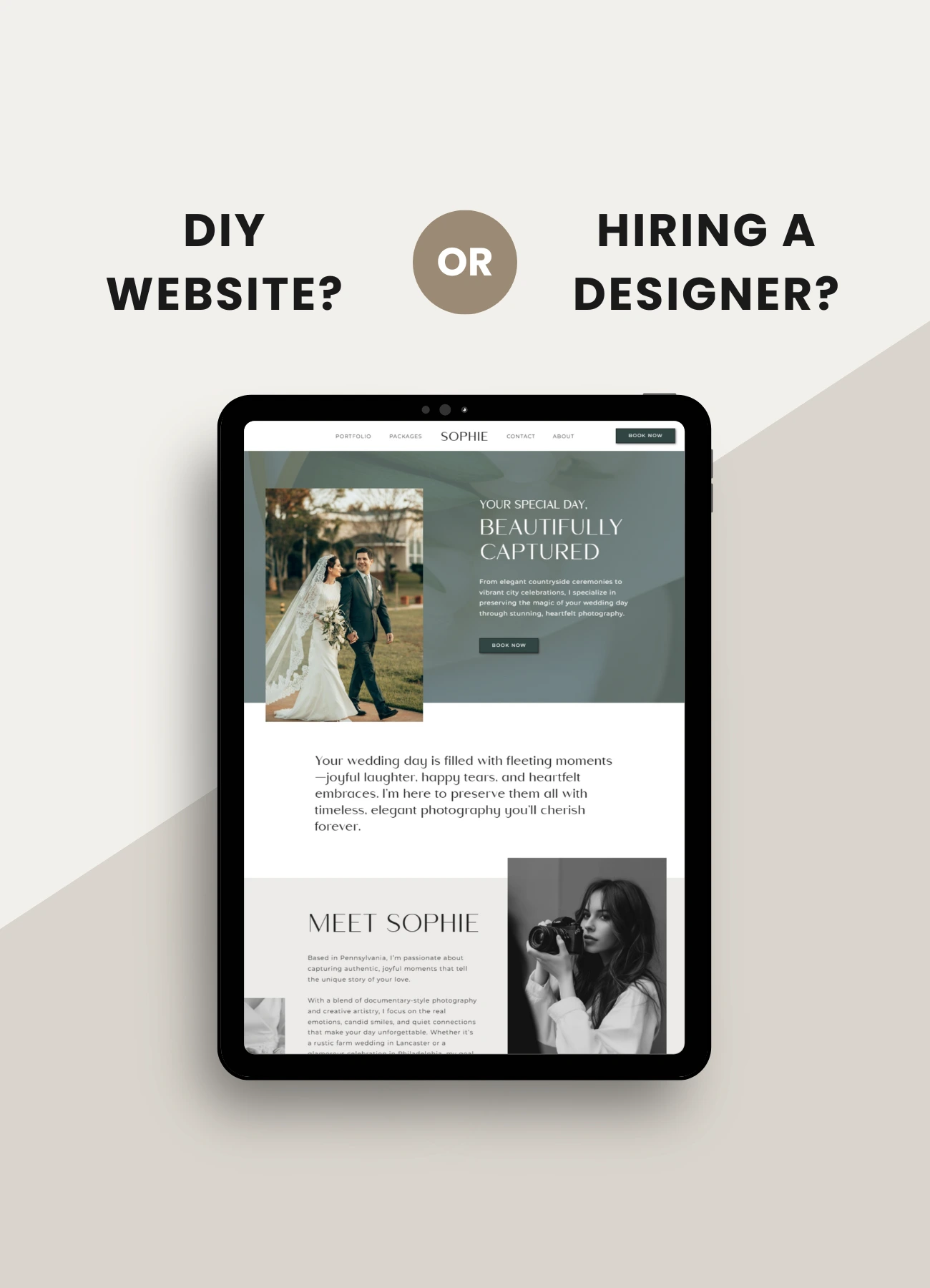
Your wedding business website is your 24/7 storefront, sales agent, and portfolio rolled into one, so the choice between a DIY website vs hiring a professional is a critical one for your brand.
Whether you’re launching a new business or revamping your website, it comes down to two options for most professionals in the wedding space: tackling the build yourself using a drag-and-drop platform, or investing in the expertise of a web designer.
There is no universally “correct” answer. Both the DIY approach and hiring a professional offer distinct advantages and drawbacks, and the best path depends entirely on your unique circumstances, budget, technical skills, and business goals.
This guide breaks down the pros and cons of building your site yourself versus partnering with a design professional, offering an objective look at the trade-offs involved so you can work out which approach aligns best with your circumstances, resources, and brand.
The DIY Approach: Taking the Reins
The “Do-It-Yourself” route typically involves using platform builders like Squarespace, Wix, or ShowIt (affiliate link). These platforms are designed to be intuitive, allowing users with minimal coding knowledge to create a functional website using pre-made templates and drag-and-drop interfaces.
Pros of Building Your Own Website
- Cost-Effectiveness and Low Barrier to Entry:This is usually the single biggest draw. Your primary expense is the monthly hosting/platform subscription fee (often less than $30 per month), plus the cost of your domain name. You eliminate the significant upfront fee associated with hiring a design professional, making it an attractive option for startups or budget-conscious businesses.
- Total Control and Instant Implementation:When you build it yourself, you have absolute control over every element, from the layout and color scheme to the copy and image choices. If you wake up with a new idea or need to change a price list immediately, you can do it without waiting for a designer’s schedule or incurring hourly maintenance fees.
- Speed of Launch:Using a template means the foundational structure is already built. If you have all your content (copy and images) ready, you can often launch a functional, attractive website within a weekend or a single week, dramatically accelerating your time to market.
- Learning Valuable Skills:The process of creating your site is educational. You gain hands-on experience with SEO basics, content management systems (CMS), and user interface (UI) principles. This foundational knowledge is invaluable for ongoing content updates and minor troubleshooting.
Cons of Building Your Own Website
- Limited Customization and Scalability: While templates are convenient, they are inherently restrictive. Achieving a truly unique, highly customized design that perfectly aligns with your specific branding can be difficult or impossible. If your business requires complex, bespoke functionality (like unique customer portals or advanced integrations), a template-based system will likely hit its limits quickly.
- The Time Investment: While the monetary cost is low, the time cost is high. Learning the platform, choosing the right layout, troubleshooting mobile responsiveness, selecting fonts, and optimizing images can consume dozens, if not hundreds, of hours. This is time taken away from focusing on your core business activities.
- Risk of Generic Design: Even the best templates can lead to a site that looks similar to competitors who used the same foundation. It takes a keen eye and extensive effort to elevate a template to a truly distinctive brand representation. If your business depends on a premium or highly unique aesthetic, the DIY approach may fall short.
- Technical Debt and Hidden Issues: You are solely responsible for technical performance, speed optimization, accessibility, and security updates. DIY solutions often suffer from poor load times due to unoptimized images or compliance issues related to accessibility standards.
The Professional Path: Hiring a Designer
Hiring a professional web designer, agency, or developer involves commissioning an expert to create a bespoke website built to your specifications.
Pros of Hiring a Design Professional
- Bespoke Design and Superior Branding: A professional designer will create a unique site that is 100% tailored to your brand identity, target audience, and business goals. They ensure a cohesive visual language, expert color theory application, and seamless user experience (UX) that immediately signals professionalism and quality. This level of customized design is crucial for premium or luxury brands.
- Optimized Performance and Technical Excellence: Developers build sites optimized for speed, security, and search engine optimization (SEO) from the ground up. They handle the complex, non-visual tasks—clean code, hosting setup, advanced mobile optimization, and integration of specialized tools—ensuring your site loads fast and performs reliably.
- Strategic Functionality and Scalability: Professionals can implement complex, unique features and build your site with future growth in mind, making it easier and less costly to add features or expand your business model later on.
- Time and Stress Savings:You save the hundreds of hours required for diy website implementation, allowing you to focus on your products, services, and clients. You also benefit from their expertise in project management and design strategy, reducing the stress of technical troubleshooting.
Cons of Hiring a Design Professional
- Significant Upfront Investment:Professional web design is a substantial financial investment. A custom, quality website can range from several thousand dollars to tens of thousands, depending on complexity and features. This cost can be prohibitive for businesses with tight initial budgets.
- Time-to-Launch: A bespoke project requires discovery and design phases, revisions, development, and testing. This process can take from a few weeks to several months, depending on the scope and the designer’s schedule, requiring more patience before launch.
- Dependence on the Designer: While the site is typically handed over to you, if the designer has used custom code rather than a website builder, you may need to rely on them for major structural updates, troubleshooting code, or making complex changes. This often means paying an ongoing maintenance retainer or hourly fee.
- The Risk of Misalignment: If you don’t choose the right designer—one who truly understands your brand’s vision and your target audience—you may end up with a high-cost site that doesn’t effectively meet your business needs. Thorough vetting and clear communication are essential to mitigate this risk.
If you’d like to learn more about how a professional designer can make a difference, read this post: Why DIYing Your Website Could Be Costing You Clients and Revenue.
Finding the Right Balance
Ultimately, the choice between building your own site versus hiring a professional hinges on a few core variables. This is not just a decision between creating a diy website vs hiring a professional, but a strategic alignment of resources and goals.
| FACTOR | DIY APPROACH | PROFESSIONAL APPROACH |
| Budget | Low initial cost; high time cost. | High initial investment; low time cost. |
| Branding | Risk of a generic look. | Bespoke, unique design; superior brand alignment. |
| Skills Required | Basic tech skills, strong aesthetic sense, patience. | Vetting and communication skills; no technical skill required. |
| Control | Full, immediate control over all edits. | Limited immediate control; more control after handover |
| Complexity | Best for simple brochure sites or basic e-commerce. | Essential for complex functionality, databases, and high-traffic needs. |
The Mid-Ground Solution (Hybrid Approach)
Many businesses find success by blending these approaches. You might start with a high-quality template on a user-friendly platform (DIY) and hire a professional designer for just a few key elements (e.g., branding, logo design, professional copywriting, or custom CSS injection) to elevate the site’s unique look without the full custom build cost. This hybrid model offers a balance of cost-effectiveness and brand differentiation.
Or you may hire a designer for a simple custom build or template customization that you can develop further as budget allows.
The Strategic Tipping Point
Many wedding professionals rely on a simple DIY site when starting out and quickly realize that this is not portraying their business in the best light.
The moment you should pivot from DIY to professional help is when you notice your website is affecting conversion.
If poor site speed, lack of custom features, or misaligned branding directly impact your revenue or competitive positioning, the investment in a design professional becomes necessary to maintain and scale your business.
Choose the path that allows you to maximize your limited resources—whether that resource is money, time, or technical expertise—while maintaining the highest level of quality required to serve your ideal customer.
Ready to elevate your online presence your way? Whether you’re dreaming of a fully custom, one-of-a-kind website or want a beautifully elevated template tailored to your brand, The Bonnie Pixel Design Co helps you create a polished, strategic site that attracts your high-end dream clients.
Contact us to explore your best-fit website option today.
FAQ
1. How long should I dedicate to a DIY website before considering hiring a professional?
If you are struggling to build a functional, visually appealing, and fast-loading website after 40 to 60 hours of focused work, it is often more cost-effective to pivot and hire a professional. This time investment, if unproductive, detracts significantly from your core business activities. Additionally, if the technical limitations of your chosen platform prevent you from implementing essential revenue-generating features, it’s time to consult an expert.
2. Can I start with a DIY website and hire a designer later?
Yes, this is a very common strategy. Starting with a DIY platform is excellent for quickly establishing a basic online presence, as long as your site is well-designed enough to convert your ideal customers.
When your business revenue grows, you can then hire a designer to level up your business presence with more strategic branding.
3. Will a DIY website hurt my SEO performance?
Not necessarily, but it requires more effort. A professional build often results in cleaner code and better image optimization, which leads to superior site speed and technical performance—factors that are heavily weighted by search engines. The main risk with a DIY approach is poor on-page optimization due to a lack of knowledge, not the platform itself.
4. What is the biggest hidden cost of building a custom site with a professional?
With some of the more technical website platforms, the biggest hidden cost will be ongoing maintenance and future development, as it’s likely that you will be unable to do these yourself without assistance.
By choosing a designer who uses an industry-standard web builder such as ShowIt or Squarespace, you will avoid this cost. These systems are essentially maintained by the platform, and sites built on these platforms are much easier for non-designers to use and update.

Jan Small is a web and graphic designer and owner of The Bonnie Pixel Design Co which offers all kinds of designs tailored for busy wedding professionals. Jan lives in Scotland with hubby and fur baby cockapoo Alfie and loves writing, yoga, and chocolate.


Leave a comment